





Komödie der Verführung - schedule, program & buy tickets
Komödie der Verführung
Date:
Time:
Location:
21.11.2026, Saturday
19:30
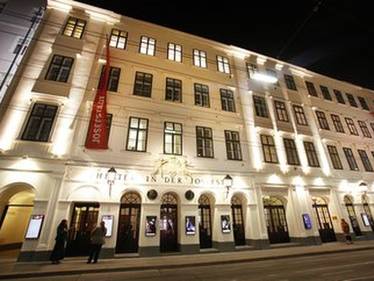
Theater in der Josefstadt, Josefstädter Straße 26, 1080 Vienna, Austria

Adapted by Ildikó Gáspár
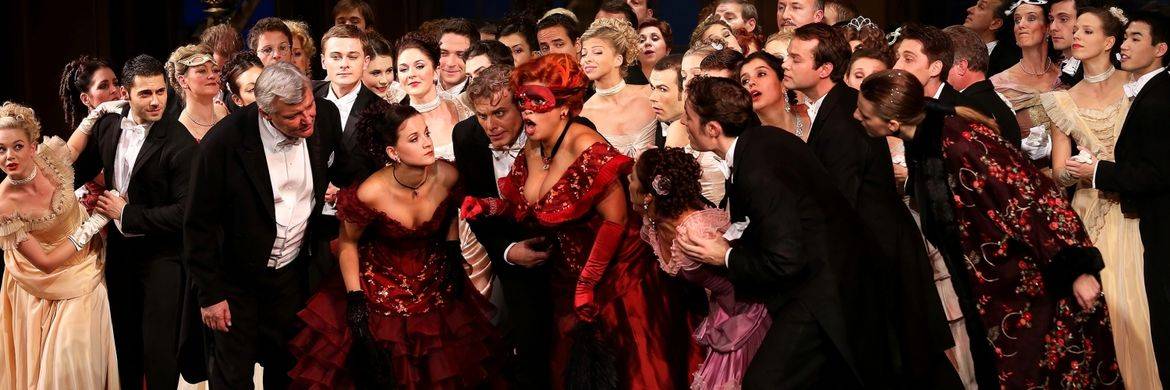
Vienna, summer 1914. Europe stands on the brink of disaster, yet high society continues to gather undeterred to celebrate. The Prince of Perosa hosts a masquerade ball. At the center of the festivities, three self-assured women take the floor: the much-courted Countess Aurelie is just beginning an affair with the daring Max von Reisenberg—a relationship doomed from the start. For Max is also courting the beautiful singer Judith, who, in turn, is in love with her sister’s husband. Nevertheless, Judith gives in to Max, but sets clear conditions—one night of love, nothing more. Seraphine, an up-and-coming violinist, is also having an affair with Max. But when she discovers she is expecting his child, she decides to raise the child on her own and rejects him.
The seduction that gives the play its title, however, is more than just a fleeting erotic game. It is about freedom and responsibility, about deception and self-deception, and about the question of what consequences one is willing to bear. What begins as a seemingly light-hearted game, in which the characters stage their own lives as a fairy tale, reveals itself—in the face of the approaching war—as a dance on the volcano.
In the production by Hungarian director Ildikó Gáspár, musical selections from the operetta repertoire will play a special role. She explores the escapist operetta bliss of a society beneath whose glittering surface the cracks of an entire era are emerging—a society on the brink of its moral and historical collapse. Schnitzler’s rarely performed play, in which a zest for life and weariness, humor and despair coexist, paints a picture that seems alarmingly relevant today.
Subject to change.