



Conveniently book Budapest Opera tickets online

Experience the Budapest Opera: opera, ballet and neo-Renaissance splendour
On the magnificent Andrássy Avenue – today a UNESCO World Heritage Site – stands one of Hungary’s most beautiful buildings: the Hungarian State Opera House, known by many simply as the Budapest Opera. In 1884, Emperor Franz Joseph I. inaugurated the house, designed by Miklós Ybl in the neo-Renaissance style.
Behind the façade of the Budapest Opera, a monumental staircase leads up towards rooms decorated with frescoes by Károly Lotz and Bertalan Székely. The acoustics of the Hungarian State Opera are considered some of the best in Europe – right after Milan’s Scala and the Palais Garnier in Paris. Here you can experience opera and ballet, concerts and guided tours.
At Vienna Classic, you’ll find the entire Budapest Opera programme. Select your performance or guided tour, check available spaces and book your Budapest Opera tickets – securely and in just a few steps online.
Your tickets to a glamorous evening
Combine your visit to Vienna with a quick trip to Budapest: in around two and a half hours, the Railjet takes you from Vienna Central Station to the Hungarian capital.
Your advantages with Vienna Classic
Secure your places conveniently with Vienna Classic – your online ticket platform for over 20 years with more than 1 million visitors each year.
Our ticket service offers:
- Book Budapest Opera tickets conveniently online
- Delivery of tickets to your email
- Secure online payment
Opera and ballet at the Hungarian State Opera
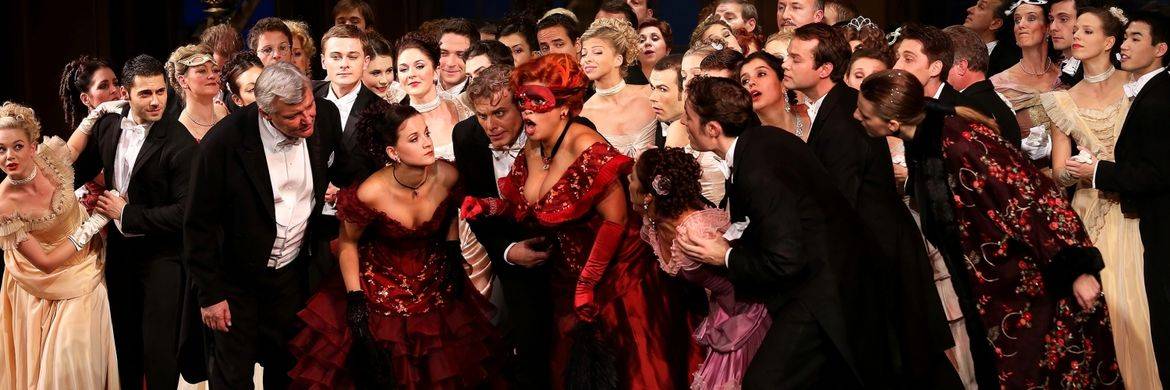
Performed on its stage are the great classics from Verdi and Mozart to Puccini. World stars such as Plácido Domingo, Luciano Pavarotti and Renée Fleming have all performed here – uplifted by acoustics where voices reach the very last row without any amplification. On ballet evenings, the Hungarian National Ballet, which is also resident here, takes over the stage.
Thus the Budapest Opera is a destination for more than just an evening. Those who explore Budapest during the day will find it to be one of the city’s most rewarding sights – whether performance or guided tour, both lead to the heart of its grandeur.
Miklós Ybl’s masterpiece on Andrássy Avenue
Between 1875 and 1884, Miklós Ybl erected the building in the neo-Renaissance style – as a palace for music and representation. Emperor Franz Joseph I. financed the construction under one condition: it had to be smaller than the Vienna State Opera. Ybl kept to the agreement, ensuring it made up for it in splendour.
The façade alone reflects the ambition of the time. Carved into the entrance are Franz Liszt and Ferenc Erkel, the house’s first musical director and composer of the Hungarian national anthem. Inside, a wide marble staircase leads upwards, above the auditorium hangs a chandelier from Mainz – and gold glitters at every turn.
The horseshoe-shaped auditorium has around 1,260 spaces and brings you close to the stage. Its acoustics are some of the best in Europe: every voice reaches you clearly, from the first row to the gallery.
Performance or guided tour: how to experience the Budapest Opera
Looking to spend a sophisticated evening? Then opt for an opera or ballet performance. Here you get to experience the venue in its truly intended purpose: as a stage for grand musical moments.
Important to know before booking: during the overall renovation from 2017 to 2022, the opera also ran at the Erkel Theatre. When buying tickets, check which venue your programme takes place in – not all performances are held at the historic opera house on Andrássy Avenue.
Budapest Opera visitor information
Address:
Andrássy út 22
1061 Budapest
Hungary
Public transport:
Metro:
M1, Opera stop
Bus:
105, 210
Stop: Andrássy út / Opera
Trolleybus:
70, 78
Stop: Andrássy út / Opera
The Budapest Opera is located directly on Andrássy Avenue. The Opera metro station is in the immediate vicinity. Plan enough time for arrival, cloakroom, navigating the building and finding your seats.
The history of the Budapest Opera: a palace for Hungary’s cultural ambition
In 1872, Hungarian prime minister Menyhért Lónyay commissioned the construction of an independent opera house. Budapest wanted to go head to head with Europe’s major cultural metropolises – Vienna, Paris, Milan. Miklós Ybl, one of the country’s most distinguished architects, won the competition.
Emperor Franz Joseph I. helped finance the construction, but imposed one condition: the building had to remain smaller than the Vienna State Opera. Ybl upheld this pact and, between 1875 and 1884, erected a building whose splendour was virtually unparalleled – with marble from Carrara, granite columns from Austria, stage technology from Vienna and a chandelier from Mainz. Frescoes by Bertalan Székely, Mór Than and Károly Lotz adorned the staircase and auditorium. On 27 September 1884, Franz Joseph I. inaugurated the Hungarian Royal Opera House.
Just a few years later, Gustav Mahler ran the house as its musical director – from 1888 to 1891 – elevating it to an international level. In the 20th century, the war got to this building too: during the Siege of Budapest in 1945, it suffered serious damage. The most recent and comprehensive restoration lasted from 2017 to 2022: it restored the façade, frescoes and chandelier true to their original state, updated the stage technology and acoustics and reduced the seating to around 1,000 spaces – for greater comfort and a better view.
Today, Ybl’s building once again shines in the splendour that has made it famous since the 19th century – and remains what it was always destined to be: Budapest’s grand stage for opera and ballet.
FAQ – frequently asked questions about purchasing tickets for the Budapest Opera
Are there English surtitles at the Budapest Opera?
Yes. There are English surtitles at the opera house. Depending on the seating, additional subtitles are also available on tablets, touchscreens or screens in the boxes.
What should I wear to an evening at the Budapest Opera?
There is no strict dress code. However, many visitors see a visit to the opera as a chance to wear smart or elegant clothing. This harmonises nicely with the festive setting of the venue.
Does the Budapest Opera have barrier-free access?
The Budapest Opera features barrier-free access points and a limited number of barrier-free seats. Check suitable seating as early as possible before booking.
Can I take large bags or luggage with me?
Coats, jackets and bulky items such as rucksacks, suitcases, umbrellas or musical instruments have to be handed in at the cloakroom. If possible, arrive without large items of luggage.
Is the Budapest Opera suitable for children?
The Budapest Opera can be interesting for older children and adolescents if they enjoy music, stage performances and a festive atmosphere. Check the age recommendation and duration of the selected performance before booking.